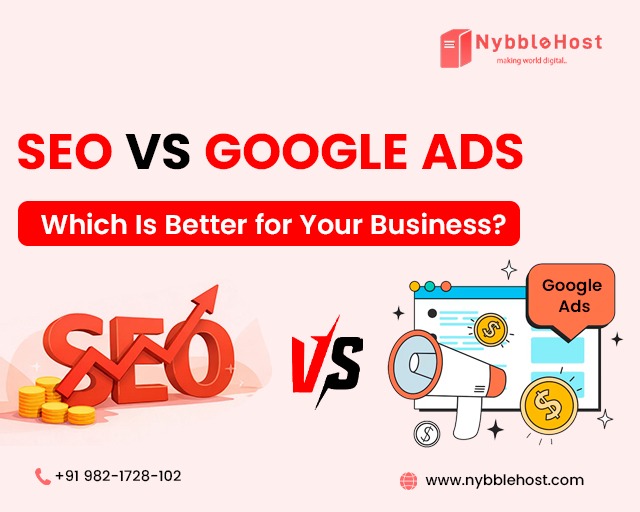
The debate around SEO vs Google Ads centers on one core question:
Should you invest in long-term organic growth or immediate paid traffic?
-
SEO (Search Engine Optimization) focuses on improving organic rankings.
-
Google Ads (PPC) drives paid visibility at the top of search results.
Together, they fall under Search Engine Marketing (SEM).
Understanding Organic vs Paid Search is essential before building your lead generation strategy.
Organic vs Paid Search: Core Differences
1. Traffic Source
SEO:
-
Organic listings
-
No payment per click
-
Earned visibility
Google Ads:
-
Sponsored listings
-
Pay per click
-
Instant placement
2. Timeline
-
SEO: 3–6 months for significant traction
-
Google Ads: Immediate traffic
3. Cost Structure
-
SEO: Upfront and ongoing investment in content and optimization
-
PPC: Continuous ad spend + management fees
4. Long-Term Value
SEO builds sustainable online visibility.
Google Ads delivers faster direct-response results.
The right choice depends on your marketing funnel strategy.
Cost Comparison and ROI Analysis
Let’s talk numbers.
SEO Investment
Typical components:
-
Technical optimization
-
Content development
-
Link building
-
Conversion optimization
SEO reduces customer acquisition cost (CAC) over time. Once you rank, clicks are essentially free.
Google Ads Investment
You pay:
-
Cost per click (CPC)
-
Campaign management fees
-
Landing page optimization
In competitive industries, CPCs can rise significantly, especially for high-intent keywords.
Example:
If your average CPC is ₹150 and conversion rate is 3%, your cost per lead is ₹5,000. Without optimization, paid traffic becomes expensive.
Digital marketing strategy comparison tip:
Short-term campaign? Ads may win.
Long-term brand building? SEO typically delivers stronger ROI.
Speed vs Sustainability
When Speed Matters
Product launch
Seasonal promotion
Flash sale
New market entry
Google Ads gives immediate reach.
When Sustainability Matters
Brand authority
Consistent website traffic growth
Competitive keyword targeting
Industry leadership
SEO builds compounding returns.
Think of it this way:
-
Google Ads is like renting a house.
-
SEO is like owning property.
SEO or Google Ads for Business: A Decision Framework
Here’s a practical framework to help you choose.
Step 1: Define Your Goal
Are you focused on:
-
Brand awareness vs direct response?
-
Immediate sales?
-
Long-term visibility?
-
Reducing CAC?
Step 2: Assess Budget Flexibility
Limited monthly budget?
SEO may stretch your investment further over time.
Flexible ad budget?
PPC can scale quickly.
Step 3: Evaluate Competition
Highly competitive niche?
Paid search allows you to target competitive keywords instantly, while SEO may take longer.
Step 4: Analyze Sales Cycle
-
Short sales cycle → Google Ads
-
Long B2B sales cycle → SEO builds trust
Most successful brands use both.
Real-World Example: When Each Works Best
Case 1: E-commerce Brand
An online fashion store needed immediate traffic before festive season.
Strategy:
-
Aggressive Google Ads campaign
-
Retargeting ads
-
Limited SEO support
Results:
-
4x ROAS in 45 days
-
High short-term revenue spike
Case 2: B2B Software Company
Long sales cycle (3–6 months).
Strategy:
-
SEO-driven content marketing
-
Educational blogs
-
Technical whitepapers
Results after 9 months:
-
70% of leads from organic search
-
Reduced dependency on ads
-
Lower customer acquisition cost
This highlights why SEO vs PPC marketing is not about “better” — it’s about fit.
Common Mistakes Businesses Make
-
Expecting SEO to work instantly
-
Running Google Ads without conversion tracking
-
Ignoring landing page optimization
-
Focusing only on traffic, not leads
-
Treating SEO and PPC as separate silos
Search engine marketing works best when aligned.
Pro Tips for Maximizing Results
-
Use Google Ads data to identify high-converting keywords for SEO.
-
Test messaging in ads before scaling content.
-
Align both strategies with your marketing funnel strategy.
-
Track assisted conversions in analytics.
-
Invest in strong landing pages.
Experienced marketers often use PPC for testing and SEO for scaling.
Benefits and Drawbacks
SEO Benefits
-
Sustainable traffic
-
Strong brand authority
-
Lower long-term CAC
-
High trust factor
SEO Drawbacks
-
Slow initial results
-
Requires consistent effort
Google Ads Benefits
-
Immediate visibility
-
Scalable budget
-
Strong direct response
-
Precise audience targeting
Google Ads Drawbacks
-
Traffic stops when spending stops
-
Rising CPCs in competitive industries
Future Trends in Search Engine Marketing (SEM)
Search behavior is evolving.
According to insights from Google and industry research platforms like Statista:
-
AI-powered search results are increasing.
-
Voice search is rising.
-
First-party data is becoming critical.
-
Automation in PPC bidding is improving efficiency.
Future-ready businesses will integrate:
-
SEO
-
PPC
-
Content marketing
-
Conversion optimization
Not choose one blindly.
SEO vs Google Ads: Which Is Better?
The honest answer?
It depends on your business stage, goals, and resources.
If you need:
-
Immediate leads → Google Ads
-
Long-term website traffic growth → SEO
-
Maximum market domination → Combine both
A balanced digital marketing strategy comparison shows that integrated campaigns outperform isolated efforts.
FAQs
1. Is SEO better than Google Ads for small businesses?
SEO is often better long-term due to lower ongoing costs. However, Google Ads can provide faster initial traction.
2. Which is more cost-effective: SEO or PPC?
SEO becomes more cost-effective over time. PPC offers predictable short-term returns but requires continuous investment.
3. Can I run SEO and Google Ads together?
Yes. Combining both improves search visibility and captures more keyword real estate.
4. How long does SEO take to show results?
Most businesses see noticeable improvements within 3–6 months, depending on competition.
5. Do Google Ads affect organic rankings?
No. Paid ads do not directly influence SEO rankings.
Final Thoughts
The SEO vs Google Ads debate shouldn’t be about choosing sides.
It should focus on:
-
Your growth timeline
-
Budget flexibility
-
Sales cycle
-
Competitive landscape
-
Lead generation strategy
For businesses serious about scaling, combining Search Engine Optimization vs PPC often produces the strongest results.
Short-term wins from paid ads.
Long-term stability from organic growth.
The smartest brands build both.