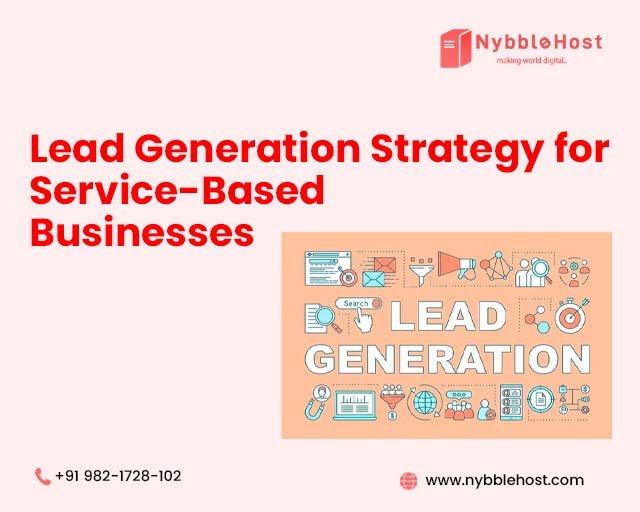
Why Old Lead Generation Tactics Are Failing Service Businesses
Cold email blasts. Generic Facebook ads. Lead forms that nobody fills out. If your service-based business is still running these plays, you’ve likely noticed the results thinning out.
Lead generation strategy has changed dramatically. Buyers are more informed, ad fatigue is real, and the bar for earning someone’s attention—let alone their trust—has never been higher. In 2026, service-based business lead generation isn’t about volume. It’s about precision.
The businesses growing fastest today aren’t necessarily spending more on marketing. They’re spending smarter—using better data, sharper targeting, and tools that can identify intent before a prospect ever raises their hand.
This guide breaks down exactly how to generate high-quality leads for service companies right now, with practical frameworks you can start applying this week.
The 2026 Lead Generation Framework for Service Providers
Think of effective lead generation as a three-layer system:
Layer 1 — Attract: Get in front of the right people through SEO, content, PPC, and social proof.
Layer 2 — Engage: Convert attention into a relationship using lead magnets, landing pages, conversational marketing, and email marketing sequences.
Layer 3 — Convert: Turn engaged prospects into paying clients with CRM software, automated prospecting, and timely follow-up.
Most businesses pour resources into Layer 1 while neglecting Layers 2 and 3. The result? Traffic without revenue.
A well-run marketing funnel for service businesses connects all three layers seamlessly—and 2026’s best tools make that more achievable than ever.
AI-Powered Lead Generation: What’s Actually Working
AI-powered lead generation for service providers isn’t a future concept anymore. It’s table stakes.
Predictive Lead Scoring
Rather than treating every inquiry equally, predictive lead scoring uses AI to rank prospects by their likelihood to convert—based on behaviour signals like page visits, content downloads, email opens, and firmographic data.
Tools like HubSpot and Salesforce now offer native predictive scoring. A digital marketing agency, for example, might discover that prospects who read three or more case studies and visit the pricing page within two weeks have an 80% close rate. Automation can then trigger priority follow-up on those leads instantly.
AI Sales Assistants
AI sales assistants can handle initial outreach, qualify prospects with conversational questions, and book discovery calls—without a human touching the process. For service businesses with lean teams, this alone can double pipeline volume without adding headcount.
Revenue Intelligence Platforms
Platforms like Gong or Clari (revenue intelligence platforms) analyse sales conversations and CRM activity to surface which deals are at risk and which prospects need a nudge. For service businesses doing consultative sales, this kind of insight changes how teams prioritise their week.
Automated Prospecting
Combine LinkedIn Sales Navigator with AI-powered CRM workflows and you can build automated prospecting sequences that identify ideal prospects, personalise initial outreach, and track engagement—all with minimal manual input.
The caveat: AI scales your strategy, not a bad one. If your positioning is unclear, automation just amplifies the noise.
First-Party Data Strategy: Your Competitive Edge
Third-party cookies are effectively dead. In 2026, first-party data strategy is the foundation of sustainable lead generation.
First-party data includes everything your audience willingly gives you: email addresses, survey responses, on-site behaviour, service enquiry history, and engagement with your content.
Here’s how to build a first-party data engine:
- Create high-value lead magnets — audits, templates, calculators, or checklists that solve a specific problem your ideal client faces. A web development agency might offer a free website performance audit; an SEO firm might offer a keyword gap analysis.
- Use gated content strategically — don’t gate everything. Gate content that’s genuinely premium, so the exchange feels fair.
- Build email marketing sequences that educate — not just sell. A nurture sequence that delivers real value over 6–8 emails builds trust long before a sales conversation happens.
- Leverage CRM software to segment and score your list based on behaviour, not just demographics.
Businesses with strong first-party data consistently outperform competitors in both cost-per-lead and lead quality.
Intent-Based Marketing and Hyper-Personalized Outreach
One of the most powerful shifts in service-based business lead generation right now is the move toward intent-based marketing.
Intent data tells you when a prospect is actively researching a solution—not just whether they fit your ideal client profile. Tools integrated with Google and LinkedIn now surface signals like competitor research, industry keyword searches, and content consumption patterns that indicate buying intent.
When you combine intent data with hyper-personalized outreach, conversion rates climb sharply. Instead of sending the same email to 500 prospects, you send a highly relevant message to the 40 who are actively looking for what you offer right now.
A practical example: A B2B consulting firm notices that a mid-size logistics company has been visiting their pricing page twice in a week and recently downloaded their supply chain case study. That’s a warm signal. A personalized email referencing their specific industry, the challenges logistics firms face in 2026, and a relevant success story will outperform any generic sequence.
Conversational marketing takes this further—using chatbots and AI-powered chat tools on landing pages to engage visitors in real time, qualify them instantly, and route high-intent prospects directly to a calendar link.
Channels That Drive High-Quality Leads in 2026
Not all channels perform equally. Here’s what’s generating the best ROI for service businesses right now:
Search Engine Optimization (SEO)
Long-form, intent-matched content paired with technical SEO continues to be the highest-ROI long-term channel for service businesses. Focus on topical authority, not just individual keywords. Google’s emphasis on knowledge graphs and semantic search means content clusters outperform isolated pages.
Pay-Per-Click Advertising (PPC)
Google and LinkedIn PPC remain effective when paired with strong landing pages and clear offers. The biggest mistake? Sending PPC traffic to a homepage. Dedicated, conversion-optimised landing pages can improve lead volume by 40–60% for the same ad spend.
For B2B service businesses, LinkedIn is still the most direct path to decision-makers. Consistent thought leadership content combined with targeted outreach—especially using LinkedIn’s native lead gen forms—continues to outperform most other paid social channels.
Email Marketing
Despite being one of the oldest digital channels, email consistently delivers among the highest conversion rates when lists are well-segmented and content is genuinely useful.
Referral Systems
Structured referral programmes—not just hoping clients mention you—are underused by most service businesses. Systematising referrals through CRM automation can add 20–30% more leads without additional ad spend.
Common Mistakes Service Businesses Make with Lead Generation
Focusing on quantity over quality. A pipeline full of unqualified leads wastes your team’s time and distorts your data. Define your ideal client profile tightly before scaling any channel.
Ignoring lead nurturing. Most service buyers don’t convert on first contact. Businesses that follow up consistently—with value, not just “checking in” emails—close far more deals.
Weak or mismatched landing pages. If your ad promises one thing and your landing page delivers something different, you’ll lose the prospect immediately.
No CRM discipline. Without a structured CRM software workflow, follow-ups fall through the cracks. HubSpot and Salesforce both offer robust pipelines even at entry-level tiers.
Treating all leads the same. Not every enquiry deserves equal attention. Implement lead scoring early to prioritise the right prospects.
Pro Tips from the Trenches
- Run a quarterly lead source audit. Know exactly which channels are producing revenue, not just leads.
- Test two landing page variants at all times. Even small copy changes can shift conversion rates meaningfully.
- Use video in email sequences. A short, personalised video from a team member dramatically increases reply rates for high-value prospects.
- Build niche landing pages. A page specifically for “accountants looking for SEO” will always outperform a generic “our services” page.
- Align sales and marketing on the definition of a qualified lead. Misalignment here is one of the most common reasons funnels underperform.
Key Takeaways
Effective lead generation strategy in 2026 is built on three pillars: smart targeting, genuine value, and consistent follow-through. AI-powered tools like predictive lead scoring, AI sales assistants, and revenue intelligence platforms give service businesses capabilities that were unimaginable five years ago—but only if they’re deployed on a clear strategy.
First-party data is your moat. Build it deliberately through lead magnets, email marketing, and CRM software. Layer in intent-based marketing and hyper-personalized outreach to reach the right prospects at exactly the right moment. And don’t overlook the basics—strong landing pages, structured nurture sequences, and a disciplined sales process.
The service businesses winning in 2026 aren’t those with the biggest budgets. They’re the ones combining smart technology with genuine expertise and a deep understanding of their clients’ problems.
FAQs
Q1: What is the most effective lead generation strategy for service-based businesses in 2026? The most effective approach combines intent-based marketing, AI-powered lead scoring, and first-party data strategies. Service businesses that identify when prospects are actively researching, then engage them with personalised outreach and strong lead magnets, consistently generate higher-quality leads at lower cost than those relying on broad-reach advertising alone.
Q2: How can AI improve lead generation for service providers? AI improves lead generation at multiple stages: predictive lead scoring identifies which prospects are most likely to convert, AI sales assistants automate initial qualification and booking, and revenue intelligence platforms surface at-risk deals and engagement signals. Together, these tools allow smaller teams to manage larger pipelines without sacrificing personalisation.
Q3: What are the best lead magnets for service businesses? The highest-performing lead magnets offer a specific, immediate result. Free audits (SEO, website, ad spend), ROI calculators, industry-specific templates, and “mini strategy sessions” consistently outperform generic eBooks. The more tailored the lead magnet to your ideal client’s actual problem, the better the lead quality.
Q4: How important is SEO for lead generation in 2026? SEO remains one of the highest-ROI lead generation channels for service businesses, particularly for B2B. Google’s focus on topical authority, knowledge graphs, and semantic relevance means businesses that build comprehensive content clusters around their core services tend to attract highly qualified organic traffic over time—prospects who are actively searching for solutions.
Q5: What CRM software is best for managing leads for service businesses? HubSpot and Salesforce are the two most widely used platforms for service businesses. HubSpot is typically better suited for small-to-mid-sized teams due to its usability and native marketing tools. Salesforce offers greater customisation for larger or more complex sales operations. Both support automated prospecting workflows, lead scoring, and pipeline management.
Ready to Build a Lead Generation System That Actually Works?
If your service business is generating traffic but not enough qualified leads—or your pipeline feels unpredictable—you’re not alone. The gap between visibility and revenue almost always comes down to strategy, not effort.
Our team has been building and refining lead generation systems for service businesses since 2012. From SEO and performance marketing to CRM setup and conversion-optimised web development, we work across every layer of your marketing funnel—not just one channel in isolation.
Whether you need a technical SEO audit, a paid advertising overhaul, or a complete lead generation architecture built from the ground up, we’d rather show you what’s possible than talk about it. Get in touch for a no-obligation strategy conversation.